Last night I did something absurd. Let me start by saying I’m an accountant to the “T.” My two brothers are accountants as well but we like to throw down on the weekends. The only thing we don’t throw down or around is money $$$. My father has always been an impulsive spender and that experience left my brothers and I burned during our childhood. When I was 22, I lost $2K via an inside scoop from my father. It was some diabetes drug that was a “sure thing” to earn FDA approval.
Fast forward, I save almost 40% of my money after taxes. I have vowed never to change my lifestyle no matter my job. My wife and I drive old used cars with AWESOME gas mileage. I threw up all over the passenger seat once and I won’t even replace the car seat cloth (I sterilized it, I’m civilized). Running is my sport not just out of love but I’m also proud of how cheap it is.
Heard about the Game Stop craze? Everyone probably has by now. Well, I had been reading about it all night on Thursday thinking these guys are idiots. It’s definitely a good shorting opportunity at this point. The value of the future income is so far below the stock price, astronomically. Anyway, I saw someone post about Dogecoin, a cryptocurrency. I said well let me try to put $50 in and maybe catch the rollercoaster on its way up. Exciting, I had gained 15% in a matter of a few minutes.
Guess what happened next? Well, why not $500. I spent the next two hours waiting till it went back up to my buying price so I could sell!!! It is now 30% lower than what I bought it at. I have invested in stocks before but they were reliable companies. At this point, I will only touch a total market index fund. This crypto could be $0 tomorrow and you’d never know. Sure, maybe I overreacted because I’m me.
Moral of the story is, if you like risk, run an ultra-marathon! COVID-19 stock market binges should not be your adrenaline rush. I learned my lesson. . .
Yes, the event is named so, and my return from injury felt like a continuous slog. Got second place in a July 50k, but I burned out in the last 5 miles.
You can gauge the success of your race based on how you finish. Burnout means you misjudged your race strategy, are mentally unfit or need more distance training.
During the Hamsterwheel 12 Hour, I was just in the zone. I had stomach issues, which lead to me not eating in the middle of the race, had calf cramps and got really sick towards the end. Regardless, I wouldn’t be denied. Not this time.
The hardest moment was finding out before my 19th 4-mile loop that I could do 1 last loop if I started before 12 hours ran out. When my wife told me, I was flabbergasted and incredulous with frustration. I kept telling myself 1 more, starting with the 1st lap. At this point, I was satisfied (I promise) with my performance.
As I was running my 19th loop, I grudgingly made the decision to walk the 20th with my wife. Took me 25 minutes (:
Ultra running is all mental I’d say, once you get past a 50k distance or a 6 hour timed loop race. My opinion.
[running is shortly addressed in last paragraph if you’ve like to skip (; ]
There were pieces that I was going to write yesterday, but I erased them. For whatever reason, fear of being open, honest, naked, exposed. I’ve spent the last 15 years on a comeback tour from a time when I was a drunk and failed out of school, fell into depression and was miserable and ashamed. Years later, when I got out of the Marines, I saturated myself with excitement, going out with friends, adding comedy to my college courses, living and breathing the city of Boston. I went to almost every bar around, tried many new types of food, made lots of friends and was successful. . . until my brothers and friends were gone, the gym was closed, Euro Cup was not on the telly. Those were the days when I faced myself and all the failures. I was a day drinker, hoping that I’d just fall asleep and reach the next day, class or moment when there was some other noise to drown it all out.
It’s still what I fight. Sometimes I worry that adrenaline is just my escape from reality. Peace comes to me when I’m moving, building something, tearing it down, always a gerund, never zen. Running is my meditation, when the world stands still, I can drink in the universe and be one with joyfulness. Hiking up mountains and facing my kryptonite, anything taller than Arnold Schwarzenegger, helps me forget, takes me away to a moment where I’m not trapped in my thoughts.
In Afghanistan, life was so simple. It’s different for everyone, but I needed to be away and work hard to keep my mind at ease. The same girl/woman was engaged to me again and broke up with me on the day I was leaving for Afghanistan. We built airfields. I would eat breakfast, spend 4 hours laying runway and yelling at the crews who were “voluntold” to help us, lunch, lay more runway until sundown and then sink into the easiest sleep you could ever imagine. Never a dull moment, hardly any communication back home, some excitement with bombs going off in the distance, bright stars in the desert and a gym made up of scrap wood, metal and some donations. It’s like going out to the white mountains and not having any cell phone network for 7 months. Liberating. A fresh pair of socks was like the heavens opening up.
The point of this post is that everyone once in a while it all comes back. That is why I started writing again two days ago because I need to talk about the stories and try to remember again. Face the reality and write of the pain. I’m not sure if I can say everything on this blog or if I need to and will. The time I walked into my Marine shop, late, drunk, unshaven and flipped a table during a meeting. I don’t remember the table, but there are many witnesses. Lost more than my request for a Japanese driver’s license. Or I found out that my fiancee was actually 16, while I was 23. She and her parents had lied to me, but. . . but I broke up with her because I felt trapped and was afraid. Weakness. I let it all destroy me, trying to make it work, but I cracked that one, and I drank myself to hell again. Spent all my money on the elixir and the rest of my enlistment trying to get back with her, debasing myself at times.
The intent of this blog is to help people get some realistic advice on topics that every runner has questions on from time to time. I have read many books about running and have focused largely on authors that provide answers backed by studies and/or success using the technique, specifically. Not like I iced my leg and suddenly I ran a great marathon. Correlation required. If I don’t know the answer, I’ll try to find out for you, but I do not practice medicine or physical therapy, so it won’t be full of complicated terminology. In addition, I would like to bring some light and optimism into this world. The above was written here to cleanse my pallet, so I can live to write about something else tomorrow. Might run my first long run in around 6 months today! Until next time. . .
Technology and COVID-19 transformed conversational pace into audio book pace. Holy mackerel! Tony Evers, thinking of you.
Might have been my running secret sauce. I got through like 20 hours of German, 10 Swedish and a couple of Spanish while running two years ago. Tried really hard to avoid people seeing me talking while I ran. Now I wonder, is that why I was so successful then???
The concept was confirmed in “Endure” by Alex Hutchinson. Pace is harder to sustain when your mind is focused on something else. Try it! Then put the phone aside and start running again. Now you’re like a wild stallion! It’s magic!
Once you force yourself through in the beginning, it becomes normal. It is difficult to keep your mind focused and might seem like a buzzing fly at first. Don’t listen to an audio book during intervals or track workouts. Come on, people.
Why do I mention this? Daily runs are not a race. You will get faster running longer. I know it’s weird and not intuitive. Staying inside the aerobic range is the most efficient way to increase your speed when you’re a beginner. Later you’ll want to do track workouts, intervals and adjust your audio book pace. The beginning is your sweet romance and you should cherish it. Break-ups are hard so you’ll want to get to know each other, go on some dates and so forth. The movie night should be a few months in, unless you’re 16.
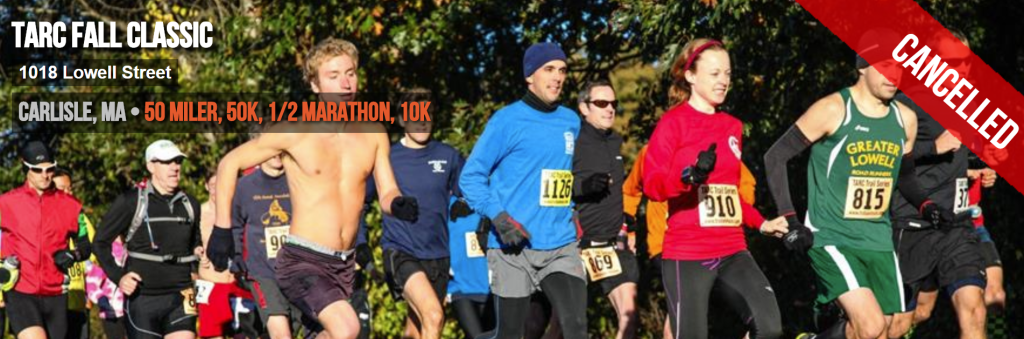
Next race is early October, Fall Classic. JUST SAW THIS IS CANCELLED! UPDATED IMAGE BELOW. I have about 7 bottles of pickle/jalapeno/beet juice combinations left in my fridge. Not supposed to be like that, but all the races are getting cancelled. Almost done eating another bottle of pickles. Maybe a short September race would help.
I appreciate you hanging in through this one. I promised to write and I did. Friday can be a hell of a drug!
It has been a long time since I’ve written anything. This probably would have continued had I not read a blog today from someone who was going through depression following an injury. I am now healthy again (crossing my fingers), but I still suffer from the after-effects. My fear isn’t about the pain or the time to heal, rather the time without running and loss of community. The writer of the blog said that a journal helped him. Very ironic because I avoided writing out of shame.
My hubris got the best of me over a year ago. I spent a few months building a wall from scratch in my backyard (see below) and decided to keep running 100+ miles. It was backbreaking, but I was a god who could do everything, the Juggernaut. Piriformis syndrome, 4 months PT. Then I ran the Vermont 100 on two weeks after my physical therapy concluded. I tore my calf. More PT. Until recently, every time that I came back to running, I jumped up my mileage too fast.
I was so embarrassed. For a while before even prompted or asked by someone, I would recite the whole story, obviously making excuses for myself. This is an injury I should own, and I realize that now. Also, it’s okay. I was too hard on myself and grew to be depressed. Most of my outside work or family interactions come from running. I’m no socialite, but I love my running friends. Unfortunately for myself, I couldn’t face the questions or injury discussions each time we met. I realize now how wrong that is, and rather I should have been involved, helping out the group, being a team player and staying in contact.
This is the selfishness that I feel the need to conquer. People say that the great thing about running is you compete with yourself, not others. I am going to try really hard to think that way going forward. So far, I have found success in feeling like an underdog, the guy who no one believed in. My anger and need for vengeance kept me going and made me strong in races. I would find something to overcome and use it to find that extra little bit of strength and energy, even convincing myself that people were against me, hoping I’d fail to meet my race goals.
The point is that I need to enjoy the moments I have living, breathing, walking, whatever, and the people around me. When someone else is successful within my performance range, I want to be happy for them. If I win, great, if I lose, well, I just need to work harder. No reason to be a bad loser and project my feelings onto them. After today, I will try to write more often and get my feelings out. Saving more commentary for tomorrow.
May 2017 – Shipyard Maine Coast Marathon – 3:37:00
July 2017 – Mad Marathon – 3:54:07
October 2017 – Baystate Marathon – 3:16:37
May 2018 – Sugarloaf Marathon – 3:00:54
October 2018 – Baystate Marathon – 2:54:57
Over two years, I went from beginner to Boston qualifier. My way is not the right way. If you hear that from anyone, walk away. There are many ways to the same solution, but I want to tell you how I did it. If it is useful, use it, if it doesn’t fit your style or situation, there are many other styles to achieve the same outcome. Here are the topics I will discuss.
Conversational pace
Mileage progression
Running technique
Long runs
Training mileage
Tapering
Diet
Track workouts
Fartleks
Conversational pace – My first two months of running taught me a huge lesson. Every week I’d call my brother in Houston up and tell him what my pace had been for my last few runs. “I’m crushing it,” I’d say. Each time my brother would support me but also throw in some commentary about making sure that I’m running a conversational pace. I would brush it aside. I was running between a 7:15 to 8:15 min pace everyday and gaining ground. Well, two months in, I got shin splints, my knees started hurting and I had to take about a month off to recover. After I recovered and to this day, my pace continues to be anywhere from 8:00 to 9:00 pace on roads. Trails can be all over the place because of terrain variance and weather conditions, but I wouldn’t recommend faster than 8:30. There is no harm being super slow, EVER! Who cares? In the beginning, it’s about getting your muscles, foot especially, used to the impact and hopefully shedding some pounds.
Mileage progression – Some use the 10% rule. I don’t believe in being too conservative in adding miles. Each of us have a natural minimum that we can start on. I could start running about 20 miles a week at first. Today, after a race, I’ll start up at 50 miles in a week and max out at 100. It’s where you are, who you are. Take your time. The most important part of adding miles is to avoid adding lots of speed training during the process. I have found that it’s better to first achieve your average training mileage and then begin track workouts or speed interval training. If you have ever worked out in the gym, remember how your muscles need a break to re-grow stronger than before. Same with running. If you go too fast, you’ll be playing catch-up the rest of your training cycle.
Running technique – Another reason I got hurt in the beginning. I’ve always tried too hard at everything. In karate, they always told me to relax my shoulders. I just wanted to will myself into every moment, throw my fist out, turning as fast as possible, etc., etc. My shins and knees failed me right away. I was raising my knees high and smashing my feet on the pavement. I should have known better. My neighbor, Keith, used to tell me to watch videos on youtube about running. He warned me about my running style. Like anything else, I just wanted to prove him wrong and push through. After my initial break to heal my shins and knees, I decided that my technique was really going to be an issue. If it really worked at all, it was meant for shorter runs. On longer runs, you need minimal impact on your body so that you don’t well, kill your body. Changing technique was difficult at first. I literally watched the ground the entire time and tripped so much. I had to consciously remind myself over and over again to keep form. Now, my feet stay under my body for the most part, and I barely raise my knees. It’s almost like skimming the ground. If you run at least 170 strides per minute on roads, you are doing the right thing. I race at 180+, but remember, these numbers are pace sensitive. Once again, trails are hard to judge because they’re all different terrain.
Long runs – The church of the Sunday long run. Saturdays if you’re Catholic. I’m not religious so I can do some early mornings in the week. I never run these hard. There is no value to me. I repeat, I repeat. Your speed will come from track workouts and fartleks/interval training. Long runs are just to get your body used to the distance. Running marathon pace miles during a long run is just limiting yourself. What is your marathon pace? You don’t know. What is your marathon goal? Don’t limit yourself. If you train for a certain pace, you are anchoring yourself into believing you can’t do better, and you won’t be recovered for track and interval training. Your speed training gets your body used to running faster and teaches you how to breathe at a faster pace. Sure, if you want to test yourself, run a few strides during a long run at a quicker pace. Now, remember, this is my way. Do what works for you. If you need to conquer some mental mountains and feel that you can run fast long, go ahead, but it always seems to put me behind in building up my pace.
Training mileage – I’ve never run a marathon without getting to a 50-60 mile max week during a training cycle. How can you run 26.2 miles and run just a little more in a week? If you have a history of running, I’ve heard of experienced runners pulling this off with no problem. Consistently, everyone I know who does this has bonked during their race, unless they’re just jogging the race for fun. Side note: google “bonk” if you’re interested. Quite a popular running term. Also, you want some 20 mile runs sprinkled here and there. It’s to assure you that you can run for a few hours and make your legs comfortable with the stress. Best is to find a running club at first. That is how I started. We have a local club that has a schedule to train for the Boston Marathon and set running routes with maps. Very organized. They even have planned water stops every three miles with all the frills (water, gu, gatorade, berries, gummy bears, jelly beans and chocolate candy). Another side note: I would avoid everything after gatorade.
Tapering – Everyone gets a taper tantrum. It’s okay. You’re crushing it 24/7 and reached your peak mileage. The race is 2-3 weeks away and you’re feeling so slam dunking awesome! BUT, you need those muscles to repair and be whole again. Time to run less and get a little anxious. That is how I feel every time, especially, at the end. My taper goes for 3 weeks prior at 80%, 60% and 40-50% of my max mileage. Some do 2 weeks, maybe 70% and 40%. Track workouts/interval training is okay but you should lower your effort, substantially. In the last week, I try to run an almost long run like 12 miles on Saturday/Sunday and take 1-2 days off in the week. Last, I run 3-5 miles before race day to get my nerves out. The whole process is tough because you’re getting excited, your muscles are juiced but you need to let them rest, so you have to let off the gas. It’s like you keep trading up car models, but each time you’re required to go slower. The prize will come because on race day, you get that Ferrari, and the training wheels are finally off.
Diet – here we go. I did this wrong for the first 6 months. I thought that I could eat anything. My weight started at about 185 and 6 months later I was about the same. I’m 5’9. That was after 500-700 miles of running. Jeez, what was I doing?! I would recommend frying your food less, avoiding red meat, eating out and working on portion control. A smart move is to begin serving your food on smaller plates. It’s a trick of the mind. Also, vegetables are good at filling your stomach, providing you nutrients and have carbs and fibre. Another thing to take note is trading food. You don’t need some fancy diet. Brown rice for white. Wheat bread for white bread. Quinoa for rice/pasta. I happen to be a vegetarian but that is not how I lost all the weight. Many vegetarians replace meat with junk food like french fries and potato chips. After I became a vegetarian, I started to cook more and replaced our protein with lentils, quinoa, tofu and nuts of all sorts. All of these are great, even if you eat meat already. Fish is a great trade for red meat. Either way, to get the bang for your buck, change your lifestyle and running will become easier. After I lost 30 pounds, my pace improved dramatically.
Track workouts – A long distance runner’s worst enemy, but remember what they say, keep your enemies close. These bad boys are how you improve your pace. When you start running hard, what happens? You get short of breath and your legs get really tired. As a beginner, even after I fixed my technique, my form would go haywire. My knees would rise up, my arms would swing and I’d start breathing in through my mouth instead of my nose. Getting used to distances will help you get faster but only to a point. In order to really get fast, you need to figure out how to run efficiently at high speeds. There are so many types of workouts that you can do. Find a track or quiet, straight roads with lots of street lamps. One example is a ladder workout, 200m run, 200 jog, 400m run, 200 jog, 600m run, 200 jog, 800m run, 200 jog, up to 1200 and then back down again. Another is just to run lots of 400s with 200 jogs or 200s with 200 jogs if you’re feeling crazy. It’s a good idea to look around online for some ideas and what paces you should be running at with each repetition. Those 200s with 200 jogs sound easy, but you’re usually doing them at a much much faster pace and more repetitions. I promise you, do track workouts and you will prosper. Find a running group if you realize you can’t push yourself enough. Know thyself!
Fartleks – “speed play” in Swedish, used as a term for continuous training with intervals. In the Marine Corps, we did these running as a platoon in a straight line. The last person in line would have to sprint up to the front. Once they were in the front, the next would have to sprint. This only worked because we were about 30 people. Doing it with 3 friends would just be silly. I like to use street lights or power lines as a way to gauge my distances and keep myself honest. I’ll choose to run a few faster then run normal pace a few. It’s not like track. It’s important to not run too hard and put some miles in. An example of a different style is to warmup for 2 miles at a slow pace, then progressively run faster each mile for 4 miles and then run your last 2 slow to cool down. It helps you get faster and it also trains your mind to battle through tough spots like hills or the very end of a marathon when you really want to give in to the temptation to slow down and make the pain go away. I value fartleks less than track workouts, but I think both are really important to having a successful marathon training cycle.
Raceday – Eat a few hours before race start so you can digest and don’t have to take a dump mid-race. Also, smile a lot! Remember, being positive can go a long way. Good luck!
I quit the TARC Frozen Yeti 30 Hour after almost 10 hours and 50+ miles, far in the lead. Yes, wow, I did.
There was someone and somewhere else I wanted to be. All this time spent running, and I’d become completely obsessed and fallen behind as a husband, friend and family member. The day after was February 3rd, Super Bowl Sunday, and I was resigned to sleep through a day when my wife really needed me after a few horrible weeks and our annual family Super Bowl party. Running that long gives you way too much time to think.
In 2018, I logged 2,700 miles and 377 hours of running time. I started running in October 2016. How quickly I fell in love? Running is one of the best things that happened to me.
I love to run because it helps me process my emotions. There are a lot of things to be excited or frustrated about, but we don’t all have a way to express them. The rustling of leaves, sun shining through the trees, birds chirping, the stillness of the woods, these are all part of the great experience. Running brings me back to simpler times. I feel like a kid again, playing in the woods, searching for frogs and building forts out of fallen branches.
Some context. My wife and I lost something special in early 2015. It derailed our lives. We were both preparing for some large life changes, and I had practically researched and read everything about being a father and planned every financial scenario to the T. When you least expect something, it hurts the most, and we got a whopper.
I did everything I could to escape feeling something, but there was nothing I could do. I cried at work, drove around at night and drank my worries away, only to find them back again and ten times worse the next day. They say running is an escape, but I disagree. You face your pain head on. It’s not like watching tv, being with friends or reading a book. You have your thoughts, all the time in the world and sometimes it can be overwhelming.
As a result of the past two years, I have never been happier. Today was not the day I gave up. Actually, it’s the day I remembered why I started running in the first place and remembered that being there for my best friend and wife means more to me than anything else. Running is my therapy, but the competitive aspect is secondary to the impact I can make on others because of its place in my life.
At 45 miles, I remembered the bigger picture and thought about what the race meant in the larger picture and it’s importance against my wife’s suffering over the past few weeks. This combined with pent-up guilt from being late and missing family events over the past few weeks, and I broke out into tears on the trail. I had been training the whole time when I should have been there.
At 50 miles, my wife had coincidentally just arrived at the lodge to cheer me on. She was ready to weather the storm, but I told her what I felt and that I wanted tomorrow to be a day spent together, and I was quitting the race. There was no better way to end, and I’m better for it.
My first big ultra, the 30hr Frozen Yeti, begins on Ground Hog Day at 8am. So far, I’ve done a 6hr TARCkey Trot (11/17/19) and 40M Winter Fells Winter Trail Ultra (12/1/19). Before those two races, I’ve run 5 marathon road races but nothing like this.
If all goes, well, here are my takeaways.
Put in the miles
Sleep deprivation
Run the course if possible
Train on more technical terrain than your race
The race is in the Hale Reservation in Westwood, MA. There is a required gear list that we need to carry at all times, and an additional gear list if forecast -20°F wind chill or below.
1. YOU DON’T NEED TO RUN THIS MUCH, BUT, leading up to the event, I got up to a max week of 100 miles like my marathon training. I recommend 60 max as a base if you’re running to be competitive. Running trails in training are key for a trail race. Common sense. I visited Hale twice and really loved the park. I also run in Walden State Park on Sundays and my beautiful hometown Fells anytime I can.
2. Two weeks ago, I was up 30 hours straight and did 4 runs to make sure I could handle the sleep deprivation. I read that practicing sleep deprivation was really helpful from Jason Robillard, author of “Never Wipe Your Ass with a Squirrel.” It was so tough, probably harder because I wasn’t always running. Ran about 25 miles total in the 4 runs. Watching tv was tough, and I almost closed my eyes a few times. When the 30 hours was over at 2pm next day, I fell asleep on my mother-in-law’s couch and pretty much slept until work the next morning.
3. It’s good to run the course so you’re ready for the terrain and know what type of wear your body will go through and any gear changes that may be necessary. For this race, I realized that I could wear trail flats. The course is not very technical, and it’s nice to have lighter shoes when tackling hills. Also, every park has a different trail width. Hale has thinner trails than my Fells, but they’re also more pronounced. The woods are thicker so any clearing usually means a trail, whereas in my Fells, the trails are nice and worn but can be deceiving. When you’re in the midst of a race and super tired, it’s nice to have a feel for knowing where to go if there isn’t another race marker nearby.
4. Another key to my running over the years, is that whatever the course, I make sure that I’m running now and then with much higher elevation and course difficulty. Usually, I run about 3000-4000 feet elevation per week, but recently, I’ve had some weeks over 8,000. The Skyline trail is considered technical and has twice the elevation per mile as Hale so I’ve run it a few times since my 40M (5 loops of Skyline). It’s important to be ready for what you’re facing and be able to say to yourself, hell, this could be worse, and I’ve done it before.
I’m both excited and nervous. My goal is to get over 100 miles and run all 30 hours, hopefully, both. Most important, I just want to know I never gave up. Hey, if some superstar shows up, I’m okay losing. First place at the 40M beat me by over 1.5 hours.
I’m up to 800 miles on a pair of race flats that I tore a hole in a couple hundred miles ago. How did I get here? When I started running two years ago, I did all the safe things that people on message boards and running websites say: 300-500 miles per pair, lots of cushion to avoid pain and all the unscientific remedies that really act as placebos for healing.
I gave up on running at all in 2013. Had to quit a race and ask for an escort back to the finish. Embarassing! My feet had been killing me for some months, probably plantar fasciitis and compensating for it had begun to hurt my knees bad.
In 2016, I picked up a pair of Hokas and gave running another shot. Flat, neutral shoes were definitely the right move, and my feet felt a whole lot better. Still, it took me another year to realize how much better my feet could feel. For my second marathon, I bought a pair of Adidas Adizero Boost 2.0. I wanted lighter shoes to race in, and they felt great. Did some track workouts in them to prepare for the race and some short runs. No pain at all.
After the race, I went back to the Hokas and realized my normal was being in some pain. It wasn’t there with the flats. Well, I fought against training in flats for a few weeks. Now, I’ve been running in them ever since. I also have a blue pair that have over 800 miles with only some small holes.
What I’ve discovered is that there is a strong middle ground between completely minimalist shoes and padded soles. I just need something on my feet, a few millimeters of fabric to keep me off the road, and the less padding, the stronger my feet become. All my friends with more padding have feet problems, and then when the pain increases, they add more padding and the cycle goes on and on.
Being able to run naturally starts with technique. If you can’t get out to a track and run a few miles barefoot, you are doing something wrong. Humans did not always have shoes with padding. Even shoes can be avoided by some runners, but I’m not there yet. I’m worried about the glass, rocks and need the traction for the New England ice I come across now and then.








You must be logged in to post a comment.